86-1506-1936-695

SCISSOR JACK

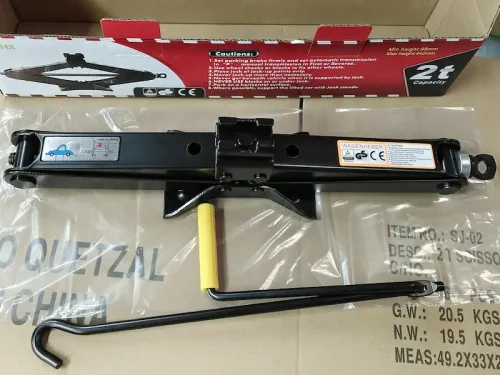
Our scissor jack series offers reliable lifting solutions for sedans, compact cars, SUVs, and RV trailers. From lightweight 0.6T side-lift jacks to labor-saving ratchet models, complete jack kits, hydraulic scissor jacks, and electric jack systems, every product is engineered for safety, stability, and ease of use—ideal for emergency tire changes and everyday maintenance.

How to Choose the Right Scissor Jack

Selecting the right scissor jack depends on your vehicle type and the level of convenience you expect during lifting. Understanding capacity, height range, handle style, and structural design will help you choose the most suitable model.

  • Load Capacity

    Match the jack capacity with your vehicle type—0.6T–1.5T for sedans, 1.8T–2T for small SUVs, and 5000–7500 lbs for RV stabilization.

  • Lifting Range

    Ensure the jack's lifting height fits your vehicle’s ground clearance.

  • Handle Type

    Choose foldable for portability, two-piece for comfort, ratchet for easier lifting, or electric for effortless operation.

  • Structure Type

    Select manual for simplicity, hydraulic for reduced effort, electric for fastest lifting, and stabilizers for RV leveling only.

Workshop & Manufacturing

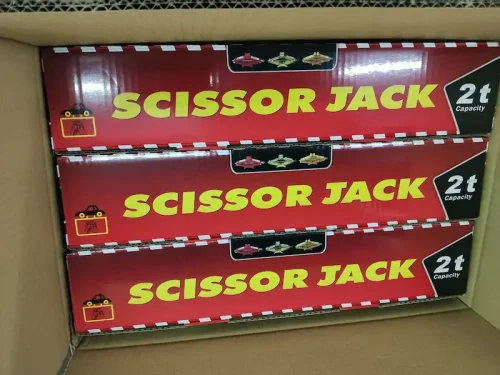
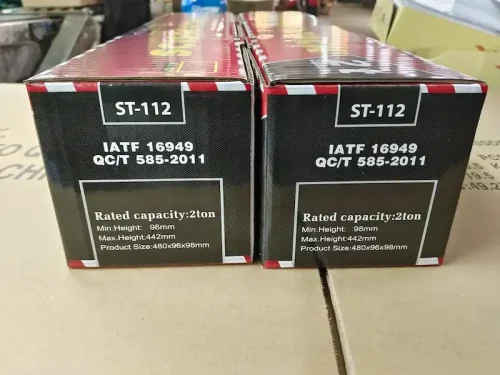
workshop of scissor jack

Key Benefits of Our Scissor Jacks

  • Reinforced Steel Construction
    Provides stability and long-term durability under heavy loads.
  • Wide Lifting Range
    Engineered to suit different vehicle models and ground clearance requirements.
  • Compact, Portable Design
    Most models fold down for easy storage in a trunk or emergency kit.
  • Smooth & Efficient Operation
    Options include standard crank, upgraded two-piece handles, labor-saving ratchet wrenches, hydraulic pumps, and electric motors.
  • Safety-Oriented Engineering
    Anti-slip bases, precise screw mechanisms, and optional overload protection ensure safe lifting.
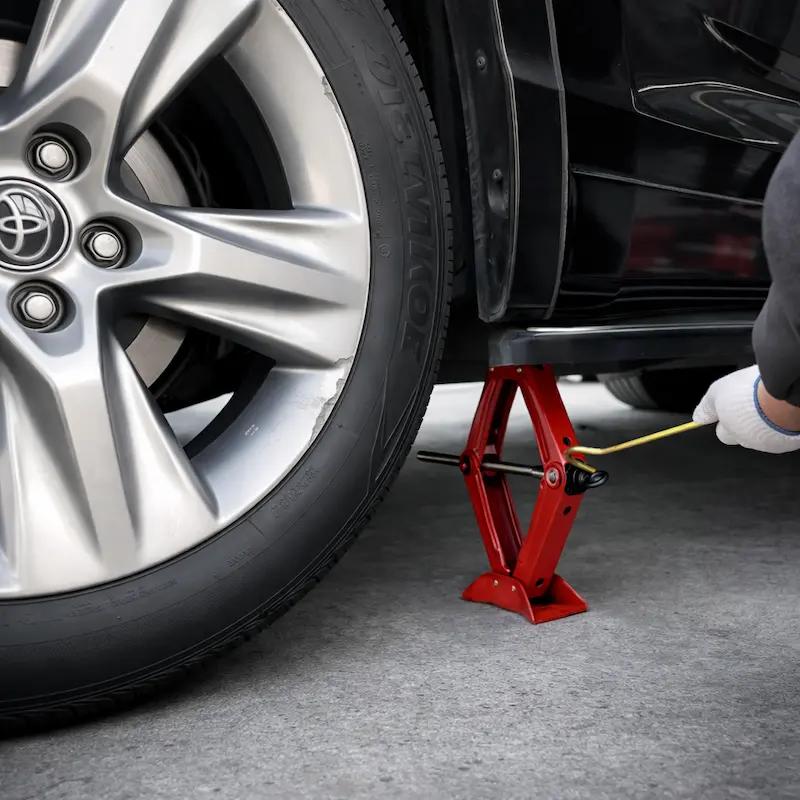
actual use of scissor jack

How to Use a Scissor Jack Safely

  1. Park the vehicle on a firm, level surface
  2. Engage the parking brake and apply wheel chocks
  3. Position the jack at the recommended lifting point
  4. Raise the jack gradually and avoid sudden movements
  5. Never work under a vehicle supported only by a scissor jack
  6. Use jack stands for long-term or underbody operations

Can't Find your Product? Download our Catalogue

FAQs

What size scissor jack do I need for my vehicle?
Most sedans use 0.8–1.5T models, while small SUVs and MPVs perform better with 1.8–2T versions. Choosing a jack rated for at least 75–100% of your vehicle's curb weight ensures safe lifting.
Can a scissor jack be used for SUVs?
Yes, as long as the model's capacity and lifting range match your SUV's weight and ground clearance. For better stability, 1.8–2T models are typically recommended.
Are scissor jacks safe for changing tires?
Scissor jacks are designed for short-term lifting during tire changes and are safe when used correctly on level ground. However, they should not be used as long-term vehicle supports—jack stands are required for that.
What is the difference between manual, ratchet, hydraulic, and electric scissor jacks?
Manual scissor jacks are lightweight and economical, ratchet models reduce effort during lifting, hydraulic scissor jacks require less manual force, and electric scissor jacks provide the fastest, most effortless operation.
Can scissor jacks lift or support RVs?
Regular scissor jacks are not suitable for lifting RV tires, but RV Trailer Stabilizer Scissor Jacks can safely level and stabilize trailers. They are not intended for tire replacement.
Why is my scissor jack hard to turn or unable to lift the vehicle?
This usually occurs when the jack is placed on uneven ground, the vehicle weight exceeds the jack's capacity, or the screw mechanism needs lubrication. Always stop if lifting resistance feels abnormal.